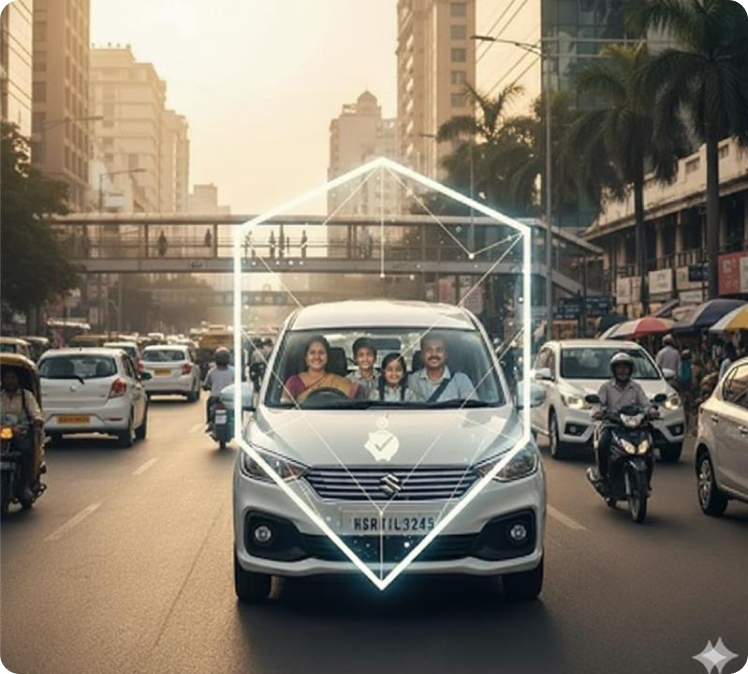
Car insurance goes far beyond compliance with the law. In today's
world, where traffic congestion, rising accident rates, and
unpredictable weather conditions create risks for drivers every day, the
right policy serves as a genuine safety net. It shields you from heavy
repair bills after an accident, safeguards against theft or natural
calamities, and provides support when third-party
liabilities arise. With insurers offering a wide range of policies from
instant car insurance available online to comprehensive private car
insurance and even luxury car insurance tailored to high-value vehicles
the modern driver has more choices than ever. But with choice comes
complexity, and this is why understanding the nuances of policies,
add-ons, and coverage extensions becomes essential.
The journey to buy car insurance is no longer a one-size-fits-all
process. The best car insurance policy for a city-based commuter in
Delhi may look very different from that of a long-distance driver in
Chennai or a luxury car owner in Mumbai. Factors like regional risks,
vehicle type, and the specific needs of the policyholder all play a
role. This guide will walk you through those considerations step by step
helping you not only compare car insurance options but also understand
which features matter most for your lifestyle. By the end, you'll see
that choosing the right four-wheeler insurance is less about chasing the
cheapest premium and more about building the right protection for your
car, your family, and your future journeys.
Policy Types & Features
When you begin evaluating car insurance in India, the first and most
important step is to understand the types of policies available. Each
comes with its own scope of protection, legal standing, and cost
implications. The wrong choice can leave gaps in coverage, while the
right one ensures complete security for your four-wheeler.
The most basic option is third-party car insurance, which is not just recommended but legally mandatory under Indian law.
This policy covers liabilities towards others injuries, deaths, or
property damage caused by your vehicle. However, it does not extend to
your own car, leaving you unprotected against repair bills or loss of
the vehicle itself.
For those seeking stronger protection, comprehensive car insurance
is often the best car insurance policy to consider. It combines
third-party liability with own-damage car insurance, which covers damages to your vehicle caused by accidents, theft,
fire, or natural disasters. This blended approach has become the go-to
for new car insurance buyers, especially when the vehicle is of
significant value.
There are also standalone own-damage car insurancepolicies. These are useful when you already have a long-term
third-party cover ;say, for three years as mandated for new cars but
still want to protect your own vehicle separately. This flexibility
allows drivers to tailor their protection without paying for overlapping
features.
Modern insurers now go beyond these basic classifications to offer
specialized features. For example, zero depreciation car insurance
ensures that claims are settled without deducting depreciation on parts
like rubber, plastic, and fibre highly beneficial for luxury car
insurance and new car insurance customers alike. Similarly, return to invoice car insuranceprotects you from depreciation entirely by compensating the full
on-road invoice value if your car is stolen or declared a total
loss.
Other features focus on longevity and convenience. Long-term car insurance or multi-year car insurance
plans allow you to avoid the annual renewal hassle and protect against
regulatory premium hikes. Some policies are IDV-based car insurance, meaning your premium is tied to the Insured Declared Value of your
car, which represents its current market value. Selecting the right IDV
is essential because an undervalued IDV reduces premiums but leaves you
underinsured, while an inflated IDV increases costs unnecessarily.
Additionally, there are policies designed for specific scenarios, such
as cashless garage car insurance, where the insurer settles repair costs directly with network garages; car theft insurance, which provides financial relief in the event of stolen vehicles; and car accident insurance, which emphasizes coverage for bodily injury and associated costs. For
those who prioritize convenience, roadside assistance car insurance
ensures you never feel stranded when emergencies strike.
In short, the world of car insurance has evolved from a simple legal
compliance product into a wide-ranging suite of protection tools.
Whether you're buying private car insurance for a family hatchback,
four-wheeler insurance for your daily commute, or a long-term
comprehensive plan for a luxury sedan, the choices today are designed to
fit every lifestyle and budget. The challenge lies not in availability,
but in carefully matching the right policy type and feature set to your
personal driving needs.
Add-Ons & Coverage Extensions
While a standard car insurance policy provides the foundation of
protection, it is the add-ons also known as coverage extensions that
truly customize the policy to fit your lifestyle, driving habits, and
regional risks. Think of add-ons as the finishing touches on a strong
insurance framework: they fill the gaps left behind by standard
policies, ensuring that your four-wheeler insurance delivers
comprehensive, real-world protection.
One of the most popular riders is the personal accident cover car insurance, which provides financial support in the event of death or permanent
disability resulting from a road accident. While third-party policies
already include basic personal accident coverage for the owner-driver,
the extended cover ensures broader protection for passengers as well,
which is invaluable for families who travel together.
For those driving in cities with poor road conditions, tyre protection cover car insurance
is often a lifesaver. Standard policies exclude damages like bulges,
bursts, or cuts in tires, leaving owners to bear costly replacement
expenses. With this add-on, repair or replacement of tires is fully
covered. Similarly, windshield cover car insurance
addresses damages to the front or rear glass of your car something
particularly relevant for urban drivers where flying debris and minor
collisions are common.
Another critical extension is the engine and gearbox protection car insurance, especially in flood-prone areas like Mumbai, Chennai, or Kolkata. A
standard comprehensive policy does not cover damage caused by water
ingress or lubricant leakage, which can easily lead to a hydrostatic
lock or severe engine failure. This add-on ensures that one of the most
expensive components of your car the engine remains protected against
such risks.
Daily running costs can also be reduced with consumables cover car insurance, which reimburses expenses for items like engine oil, brake oil, nuts,
bolts, washers, and lubricants. These small costs add up quickly during
repairs, and this add-on ensures you are not left paying out-of-pocket
for them. For owners concerned about theft or misplacement, loss of personal belongings car insurance
provides relief by covering stolen items such as laptops, wallets, or
other valuables left inside the car, subject to policy terms.
Together, these add-ons transform a plain-vanilla insurance plan into a
tailor-made protection package. A car owner in Delhi may opt for
consumables and personal belongings cover because of frequent city
repairs and higher theft risks. Meanwhile, a driver in coastal Chennai
may prioritize engine protection to guard against flooding, while
someone in Pune might value roadside assistance and windshield cover for
long-distance drives on highways.
What's important to remember is that add-ons, while increasing the
premium, add real value in times of crisis. They bridge the gap between
theoretical coverage and practical protection, ensuring that when an
accident or emergency does occur, you're not left with unexpected
expenses. By carefully selecting extensions that align with your driving
environment, lifestyle, and vehicle type, you can ensure your car
insurance policy is not just legally compliant but holistically
protective.
EV & Hybrid Car Insurance
As India embraces the shift towards greener mobility, the rise of
electric vehicles (EVs) and hybrids has introduced a new dimension to
car ownership and with it, a unique set of insurance needs. Traditional
car insurance was built around petrol and diesel vehicles, but electric
car insurance and hybrid car insurance are steadily becoming mainstream
as more drivers opt for sustainable alternatives. With brands like Tata,
MG, Hyundai, and Toyota leading the EV and hybrid revolution, insurers
have responded by designing specialized policies that reflect the risks
and realities of these new-age cars.
Take the case of Tata Nexon EV insurance
one of the most popular electric cars in India. Its coverage
requirements differ from a conventional hatchback because the cost of
its battery pack alone can be as high as 30-40% of the vehicle's value.
Similarly, MG ZS EV insurance and Hyundai Kona EV insurance
must account for advanced electronics, expensive lithium-ion battery
replacements, and limited but growing service networks. These factors
make comprehensive electric car insurance not just advisable but
essential, as it ensures protection against both traditional risks like
accidents and unique risks like battery failure or charging equipment
damage.
Hybrids present another important case. Cars such as the Toyota Hyryder hybridand Honda City e:HEVcombine internal combustion engines with electric drivetrains. While
hybrid car insurance works much like conventional policies, it must also
consider the complexity of dual systems. Repairs to hybrid powertrains
or their associated electronics are costlier than those for regular
vehicles, making add-ons like zero depreciation car insurance or
extended engine and gearbox cover particularly valuable.
EV and hybrid policies also highlight location-specific risks. In metro
cities like Delhi, Bangalore, and Mumbai, where charging infrastructure
is gradually expanding, insurers may price premiums based on traffic
density and accident rates. In contrast, tier-2 cities adopting EVs face
risks tied to limited service centres or theft of charging equipment.
For long-distance highway drivers, roadside assistance add-ons tailored
to EVs covering mobile charging vans or towing to the nearest fast
charger are becoming increasingly important.
Another key consideration is how insurers calculate the Insured Declared Value (IDV)for EVs. Since depreciation rates for lithium-ion batteries differ from
those of conventional engines, EV policies often have customized IDV
calculations. Choosing the right IDV ensures you're neither overpaying
on premiums nor under-insured if a total loss occurs. Some insurers also
provide green discounts or incentives on premiums to encourage
eco-friendly adoption, making EV and hybrid car insurance not just a
protection tool but also part of India's larger sustainability
push.
In short, while buying car insurance for an EV or hybrid follows the
same principles as petrol or diesel cars balancing coverage, add-ons,
and insurer reliability the finer details matter more. Comprehensive EV
insurance with battery protection, roadside assistance, and zero
depreciation cover ensures these vehicles are future-ready not just on
the road, but also in the safety of your financial planning.
Popular Car Models & Insurance Insights
When choosing the right car insurance in India, the model of the car
you drive has a direct influence on the type of coverage you need and
the premium you pay. Different cars carry different risk profiles based
on their market value, repair costs, popularity, and safety ratings. As
a result, the best car insurance policy for a compact hatchback is
rarely the same as the one suited for a premium SUV. Understanding how
insurance applies to popular models helps car owners make better,
model-specific decisions.
Take Maruti Suzuki Swift insurance
as an example. The Swift, being one of the most widely sold hatchbacks
in India, enjoys relatively low repair costs and a vast network of
service centres. This translates to affordable premiums for both
third-party and comprehensive car insurance. However, its popularity
also makes it a common target for theft, which is why add-ons like
return to invoice cover or zero depreciation cover are worth
considering.
For mid-size SUVs like the Hyundai Creta insurance and Kia Seltos insurance, insurers account for higher Insured Declared Value (IDV) due to their
price point, which results in higher premiums compared to entry-level
hatchbacks. Since these models are often purchased by families for
long-distance use, roadside assistance and consumables cover become
practical add-ons. Their sophisticated electronics and infotainment
systems also mean that even minor accidents can lead to expensive
repairs, reinforcing the need for comprehensive coverage.
Compact SUVs like the Tata Nexon insurance
sit at the intersection of affordability and modern safety features. The
Nexon, with its high Global NCAP safety rating, can sometimes attract
marginally lower premiums compared to less secure vehicles. Still, being
a high-volume seller, its insurance policies are designed with
flexibility in mind, allowing buyers to add riders such as personal
accident cover or engine protection to match their usage patterns.
Sedans like the Honda City insurance
illustrate another dimension. The City, known for its premium
positioning and urban appeal, comes with higher repair costs than
mass-market hatchbacks. Policies for such vehicles benefit greatly from
zero depreciation cover to avoid out-of-pocket expenses for parts
replacement. For hybrid versions like the City e:HEV, engine and
battery-related riders become even more relevant.
Larger SUVs like the Mahindra XUV700 insurance
highlight how vehicle class and performance directly affect premiums. As
a feature-rich SUV with powerful engines, the XUV700 commands higher IDV
values and consequently higher insurance costs. Owners often opt for
add-ons like engine and gearbox protection, roadside assistance, and
consumables cover to offset the higher repair costs associated with
large SUVs.
Ultimately, insurers assess each car model not just by its price but by
its claim history, theft risk, and repair ecosystem. A hatchback owner
in Pune may choose a basic comprehensive plan with zero depreciation,
while an SUV owner in Delhi may need a policy with multiple riders to
account for dense traffic and accident risks. By comparing car insurance
policies across popular models, drivers can see how premiums, add-ons,
and features are shaped by the unique profile of their car.
Factors That Influence Premiums
One of the most important aspects of buying car insurance in India is
understanding how premiums are calculated. Premiums are not arbitrary
figures they are carefully determined through a mix of vehicle-specific,
driver-specific, and policy-specific factors. By knowing what influences
your premium, you can take informed steps to balance affordability with
protection and even reduce costs without compromising on coverage.
At the heart of every calculation lies the Insured Declared Value (IDV), which represents the current market value of your car. The IDV acts
as the ceiling for any claim payout in case of theft or total loss,
which is why it directly affects the premium. A higher IDV means a
higher premium, but it also ensures better compensation. For new car
insurance policies, setting the right IDV is critical overstating it
unnecessarily inflates your premium, while understating it leaves you
under-protected.
The make and model
of the car also matter. A mass-market hatchback like the Maruti Suzuki
Swift attracts lower premiums due to affordable repair costs and
widespread availability of spare parts. In contrast, insuring a premium
SUV like the Mahindra XUV700 or Hyundai Creta comes at a higher cost
because of expensive electronics, advanced features, and higher repair
bills. Similarly, luxury car insurance
for brands like BMW or Mercedes is priced significantly higher,
reflecting the high-risk exposure for insurers.
Another key factor is the engine capacity (cubic capacity or CC). Cars with higher engine displacement are considered riskier and
therefore attract higher third-party liability premiums, as mandated by
the Insurance Regulatory and Development Authority of India (IRDAI).
Fuel type also plays a role diesel cars insurance
typically costs more than petrol cars due to higher repair expenses,
while vehicles fitted with CNG kits may attract a loading on premiums
for safety reasons. With the growing adoption of electric and hybrid
cars, insurers are also refining their pricing models, often factoring
in battery replacement costs and specialized repair requirements.
The age of the car
naturally influences premiums as well. Older cars have lower IDVs due to
depreciation, which reduces the own-damage portion of the premium.
However, they may also face higher repair frequency, which makes add-ons
like roadside assistance or consumables cover attractive. For brand-new
cars, opting for zero depreciation cover and return to invoice cover
ensures maximum protection at slightly higher costs.
Driver-specific and geographic factors are equally critical. Younger
drivers under 25 are statistically more prone to accidents, leading to
higher premiums. A clean driving record, on the other hand, can help
maintain affordable rates. Geographic location
plays a major role car insurance in Delhi or Mumbai tends to cost more
than in Lucknow or Jaipur, given the higher traffic density, accident
frequency, and theft risk in metro cities. Insurance companies also
classify areas into risk zones based on claim history, which directly
influences pricing.
Finally, policy-related aspects like deductibles and the No-Claim Bonus (NCB)
affect premiums substantially. Deductibles represent the amount you pay
from your own pocket before the insurer steps in. Opting for a higher
voluntary deductible lowers your premium but increases out-of-pocket
liability during claims. The NCB, on the other hand, is a reward for
safe driving it offers discounts up to 50% on the own-damage portion of
your premium if you haven't made a claim in consecutive years. Since the
NCB is linked to the policyholder and not the vehicle, it can even be
transferred to a new car, making it one of the most valuable cost-saving
tools for responsible drivers.
Together, these factors show why two people driving seemingly similar
cars may still pay very different premiums. By understanding how IDV,
car age, model, engine capacity, location, and personal driving habits
come into play, you can fine-tune your coverage to strike the right
balance between affordability and adequate protection.
Location-Based Car Insurance Insights
Car insurance premiums are not uniform across the country they vary
depending on where you live and drive. In India, insurers closely
analyse regional risks such as traffic congestion, accident frequency,
theft rates, and even weather patterns to determine pricing. As a
result, buying car insurance in Delhi looks very different from
purchasing the same coverage in Lucknow or Jaipur.
Take car insurance in Delhi
as a case in point. The capital's dense traffic, frequent accidents, and
high theft rates place it in a “high-risk zone” for most
insurers. This typically translates into higher premiums compared to
smaller cities. Similarly, car insurance in Mumbai
reflects both the challenges of heavy congestion and seasonal flooding,
which increases the likelihood of engine and electrical damage. For
drivers here, add-ons like engine protection cover and roadside
assistance become almost non-negotiable.
In car insurance in Bangalore, the IT hub's sprawling traffic conditions and high vehicle density
drive premiums upward, though the city's relatively low theft rate
compared to Delhi provides some balance. Meanwhile, car insurance in Chennai
carries its own distinct risks, with coastal flooding and cyclones
making comprehensive policies with engine and consumables cover
especially valuable.
The eastern metropolis has its own trends car insurance in Kolkata
is affected by erratic monsoons and aging infrastructure, factors that
insurers account for in risk profiling. In contrast, car insurance in Pune
often comes at slightly lower rates compared to Mumbai, given its
relatively better road conditions and lower congestion, though theft in
certain areas still raises premiums.
Insurance costs also vary in rapidly growing urban centres. Car insurance in Ahmedabad
is influenced by expanding traffic density and higher accident ratios,
while car insurance in Jaipur
often benefits from lower population density but can still reflect
seasonal risks like flooding in certain pockets. In the north, car insurance in Lucknow
is generally more affordable compared to tier-1 metros, but as the city
grows and traffic intensifies, insurers are gradually adjusting their
risk models.
These variations illustrate why comparing car insurance online is not
just about the policy type or add-ons it is also about understanding how
your city's profile influences costs and coverage needs. A comprehensive
plan with zero depreciation may make sense in Mumbai, where accidents
and weather risks are high, while a more affordable comprehensive policy
with roadside assistance could be adequate for a driver in Jaipur.
Recognizing these city-specific nuances helps ensure that your car
insurance is tailored not just to your vehicle and driving habits, but
also to the realities of where you live.
Regulatory Metrics & Insurer Credibility (CSR, ICR, IRDAI)
When it comes to car insurance, choosing the right insurer is just as
important as selecting the right policy. A low premium or a long list of
add-ons means little if the insurer is unreliable during the claims
process. To safeguard policyholders, regulators like the Insurance Regulatory and Development Authority of India (IRDAI)
publish official performance data that helps customers judge an
insurer's credibility. Among the most critical benchmarks are the Claim Settlement Ratio (CSR) and the Incurred Claims Ratio (ICR), both of which provide insights into how insurers handle claims.
The Claim Settlement Ratio (CSR)
measures the percentage of claims an insurer has settled compared to the
total number of claims received in a financial year. A high CSR
generally above 95% is an encouraging sign that the company is
dependable when it matters most. For example, if you file a claim after
an accident in Delhi or a flood-damaged car in Mumbai, a high CSR
indicates a higher likelihood of your claim being honoured without undue
delay. It reflects the insurer's commitment to policyholders and is one
of the most trusted indicators of reliability.
The Incurred Claims Ratio (ICR), on the other hand, tells you how much the insurer spends on claims
compared to the premiums it collects. An ICR of around 70%-90% is
generally considered healthy. An extremely high ICR (over 100%) may
indicate that the insurer is paying more in claims than it earns in
premiums, which could lead to financial strain. Conversely, an unusually
low ICR may suggest that the insurer is rejecting or avoiding too many
claims. For a car owner in Bangalore or Kolkata, understanding the ICR
ensures that you're not only choosing an insurer with strong financials
but also one that doesn't shy away from paying genuine claims.
Together, the CSR and ICR create a balanced picture: CSR shows the
insurer's efficiency and willingness to pay claims, while ICR highlights
financial health and claim-handling practices. Both sets of data are
published annually by IRDAI, ensuring transparency in the market. In addition, IRDAI also issues
guidelines and mandates to keep insurers compliant with fair practices,
whether it involves standardizing add-ons like zero depreciation or
regulating how premiums are calculated for different vehicle classes,
from hatchbacks like the Maruti Suzuki Swift to SUVs like the Mahindra
XUV700.
For car owners comparing car insurance online, these regulatory metrics
serve as a compass. A flashy discount or a quick quote might grab
attention, but the long-term peace of mind comes from knowing that your
insurer is backed by strong numbers. By relying on IRDAI-published data,
you can cut through marketing promises and choose an insurer whose track
record is proven. After all, the real test of a car insurance policy
isn't the day you buy it it's the day you need to make a claim.
Conclusion-Making the Right Choice

Car insurance in India is not just a regulatory checkbox it is a
thoughtful investment in your safety, financial security, and peace of
mind. From understanding the different types of policies, such as
third-party liability, comprehensive cover, and standalone own-damage,
to exploring add-ons like zero depreciation, engine protection, and
roadside assistance, each element has a role to play in building the
right protection for your vehicle. For owners of popular models like the
Maruti Suzuki Swift, Hyundai Creta, or Mahindra XUV700, the choice of
coverage depends not only on the car's value but also on usage patterns,
city-specific risks, and long-term ownership plans. For new-age buyers
considering electric and hybrid cars such as the Tata Nexon EV or Toyota
Hyryder, insurance needs extend to battery coverage, high repair costs,
and specialized roadside assistance, reflecting how the market is
adapting to innovation.
Equally important are the factors that influence premiums, from the
insured declared value (IDV) and engine capacity to driver history,
deductibles, and no-claim bonuses. Recognizing how these variables
interact empowers you to balance cost with comprehensive protection.
Geography also plays a crucial role whether it is the high theft risk in
Delhi, the monsoon-related engine damage in Mumbai, or the comparatively
lower premiums in Lucknow and Jaipur, insurers assess your city as much
as your car. Finally, credibility cannot be overlooked. By studying
IRDAI-published metrics like the claim settlement ratio (CSR) and
incurred claims ratio (ICR), you can separate insurers with strong,
dependable track records from those that may not support you in
difficult times.
Ultimately, choosing the right car insurance is about more than chasing
the lowest premium. It is about aligning your policy with your
lifestyle, your vehicle, and your regional realities. When you buy car
insurance online, compare not just costs but coverage depth, add-on
flexibility, and the insurer's claim-handling reputation. The best car
insurance policy is one that fits your needs seamlessly, protects you
against both expected and unexpected events, and allows you to drive
with confidence. Your car is more than just a machine it is a partner in
your daily life, a vessel of family memories, and sometimes even a dream
realized. Protect it wisely, and every journey you take will be backed
by the assurance that you made the right choice.